Wednesday, 11 September 2019

Spanish tapas

Spain is such an incredible source of unique flavours. From tasty tapas to superb seafood and traditional roasts, Spanish food is all about making the most of the best local produce. 

Today we will talk about tapas - small portions of foods, both hot and cold, served in bars, bodegas and also restaurants. Tapas were invented in Andalusia. The word means literally a lid and the term was thought to have come from the habit of having a few nibbles with a drink and the necessity of placing a saucer or tapas on top of a glass to keep the flies out.

Each tapas is really no more than a bite, so you can either sample two or three before dinner, or you can make a meal of them by ordering larger portions, called raciones.


1. Tortilla de patatas - a thick egg omelette made with potatoes and onions and fried in olive oil. It is such a popular dish some call it "the national dish of Spain."


2. Patatas Bravas - is one of the classic Spanish tapas dishes and is served in bars all over Spain. Potatoes are cut and fried in oil before being served with either a spicy tomato-based sauce (like in Burgos) or alongside aioli (like in Valencia and Catalonia).


3. Gambas Pil Pil - garlic shrimps. Gambas are an easy, mouthwatering Spanish dish extremely popular in the south of Spain. The focal ingredients are shrimp, garlic, and olive oil, but even so, it’s hard to find two versions that taste the same, as Spanish cooks tend to add their own touches to every food they’re preparing.


4. Calamares a la Romana - fried squid rings - simple but delicious and very popular appetizer.


5. Pulpo a la gallega - octopus cooked in boiling water, seasoned in paprika, and served hot in olive oil.


6. Tortillitas de camarones – shrimp fritter. It is a fried dish made with flour, prawns in olive oil, and a hint of lemon juice – crunchy and delicious!


7. Boquerónes - deep-fried anchovies. These little fish come fresh, pickled, or fried, and they’re nothing like the strong and stinky morsels you might have tasted elsewhere.


8. Croquetas de Jamón - ham croquettes. They are a small, lightly breaded and fried sort of fritter. Very creamy and tasty. A bechamel and ham mixture turns into a dough that you roll into logs and coat with egg and breadcrumbs - then the croquettes are fried to golden brown.


9. Albóndigas – meatballs. Most often pork, but also of beef cooked in garlic tomato sauce.


10. Ensaladilla Rusa - russian salad. Potatoes are mixed with tuna, mayonnaise, and vegetables like carrots and peas — may have its roots in Russia, but the dish is popular across eateries in Spain.


11. Pipirrana Malagueña - is a refreshing summer salad made up of a mix of diced onion, tomato, cucumber, red and green peppers, and dressed with sherry vinegar, salt, and olive oil.


12. Jamón Ibérico - a dry-cured ham produced from Iberian pigs. While you can find it throughout Spain, Andalusia is famous for producing some of the highest quality.


13. Chorizo - it is an utterly delicious pork sausage with lots of garlic and pepper. The Spanish chorizo can be sweet or spicy, served raw as a tapa, or added in various dishes. For a quintessential Spanish experience, try it with Manchego cheese and a glass of Rioja.


Thursday, 8 August 2019

The Route of the White Villages


Between the Atlantic in the west and the Mediterranean in the east, lies some of the prettiest hidden towns of Spain. If you are visiting or living in Andalucia, southern Spain, you cannot miss a trip to “pueblos blancos”, also known as white villages

They date back to the Romans and Moors, offer spectacular flora & fauna, historical walking routes and are havens for birds watchers & wildlife lovers. Although all the white villages may look the same, white and all, they each have their own characteristics and charms to experience and explore.

The “route of the white villages” is a tourist route that spreads from region of la Sierra, the region of Janda, in the province of Cadiz and the Serrania de Ronda, in the province of Málaga. The official route goes through many villages and towns but we will introduce the most popular ones.


1. Arcos de la Frontera. Gateway to the Pueblos Blancos. 


Sitting on a spectacular sheer cliff, Arcos de la Frontera is a picturesque town full of small reminders of its Arab inheritance. Its old town has been declared Property of Cultural Interest. Towers, churches and splendid viewpoints with views of the River Guadalete are just some of the countless attractions offered by this area. 


A few kilometres from the village is the lake Arcos, which offers the possibility of water sports and take a dip if the heat squeezes.


2. Grazalema: A High-Mountain Village in a Natural Park. 


Grazalema is a picturesque high-mountain village nestled in a valley and surrounded by the Parque Natural de Sierra de Grazalema. This expansive natural park covers more than 53,000 hectares and is listed as a UNESCO Biosphere Reserve, as well as a "special protection zone" for birds.

The rugged scenery of limestone mountains, pine forests, oak groves, and rushing rivers inspires outdoor activities. Favorite things to do at the Sierra de Grazalema nature reserve include hiking, fishing, and bird-watching.


3.  Zahara de la Sierra. 


The town is found in the heart of the Sierra de Grazalema Natural Park, offering views of the valley that you can not miss.  The views are stunning and best appreciated from the look-out balconies or by climbing higher up to the Moorish castle. Zahara is also well known for its beautiful turquoise lake. The water that comes from mountain springs is clean and inviting and the reservoir is a popular venue for swimming in the summer months.


4. Setenil De Las Bodegas.


For many it is the most charming town of the route.What really drew attention to Setenil de las Bodegas is the town itself – the beautiful streets and its intriguing houses. The streets go down from the castle taking the path of the river and locals have learned to take advantage of the cliff that the river forms on the rock to build houses. This type of housing is known as “abrigo bajo rocas” (rock shelters) and in contrast to other Andalusian constructions (for instance the caves in el Sacromonte de El Albayzín) it is not carved into the rock, instead the walls are enclosed by the rock and then made into houses. Quite an impressive and ingenious way to get close to nature.


5. Ronda 


Ronda is one of Spain’s oldest towns and the name comes from its position surrounded by mountains. It’s been inhabited by Romans and Moors and you can feel history all around you in its cobbled streets, old mansions and stone churches. The town is perched precariously on top of a cliff with views of rolling hills and Andalusia’s white villages. It’s the hilltop location that’s made Ronda famous.


It was a big favourite with the 19th century Viajeros Romanticos, aka the romantic travellers. Orson Welles, Alexander Dumas and Ernest Hemingway all loved Ronda and spent their summers here. Hemingway even said “Ronda is the place to go if you are planning to travel to Spain for a honeymoon… the whole city and its surroundings are a romantic set”.
The town also has one of Spain’s oldest bullrings, which is allegedly the home of modern bullfighting.


6. Casares


More about Casares you can find in our previous post HERE


Friday, 21 June 2019

The night of fire - Noche de San Juan


San Juan is the festival celebrated on June 23rd, a magical night that welcomes the summer season.  The celebration takes place during the shortest night of the year; the summer solstice. It is a celebration that is usually held on the beach with roaring bonfires, drinks, food and friends. This welcoming of summer involves a little of everything you should expect from summertime in Spain, but amplified. In Spain, people are said to live outdoors, so the start of summer is a huge excitement. Everyone is ready to have fun, be with friends and family, and celebrate with food, drinks, and bonfires.


Massive bonfires are built on the beaches in Marbella and the Costa del Sol, which represent purification of the spirit. Huge papier mâché figures and faces are then burned through the night, sometimes starting only at midnight. There is also a tradition, which states that if you jump over the bonfire three times on San Juan Night, you will be cleansed and purified burning all your problems away. Water is also brought into the equation to recuperate and rejuvenate. According to tradition, people jump into the water at midnight in order to wash away evil spirits. You may see others washing their faces and feet three times so they may be granted three wishes and have a successful and happy year ahead.


The festival has ancient, pagan origins. Originally a summer solstice celebration, bonfires were lit to honor the sun and to protect against the evil spirits who could roam freely for the night. Overall, San Juan was a celebration tied to nature, honoring the change in season.
After the introduction of christianity, the celebration became linked to the birth date of Saint John the Baptist, the 24th of June.


If any town in Andalucia knows how to celebrate this magical night, it’s San Luis de Sabinillas. Every year, huge, colourful statues are waiting on the beach to be set ablaze in a party that will light up the sleepy town, bringing hoards of party goers from all over.


It is also a night full of Superstition. If you want to be lucky for the next 12 months you may want to:
  • Jump over a bonfire.
  • Burn a piece of paper with your lovers name on it.
  • Burn something old and personal to leave behind bad spirits from the past and start a new phase.
  • Swimming in the ocean after midnight purifies soul and body.
  • Fountains and natural water resources become magic and have healing properties.


Every region in Spain has different local traditions, however all of them are related to fire and water.

Thursday, 2 May 2019

Local Chiringuitos


Similar to Greek tavernas, Spanish chiringuitos are a unique feature of Spain’s Mediterranean coast, offering welcome shade, refreshingly cold drinks and wide choice of tapas and other food.

With the summer now firmly arrived in southern Spain, these beach bars – chiringuitos as they are known locally – are open up and down the Andalucian coast.

The word is said to come from the 19th century sugar cane fields of Cuba. Workers would take a coffee break filtering the thick black liquid through a sock so that a small stream of coffee, or chiringo, would fill their cup. Some enterprising souls eventually built makeshift coffee shacks which were dubbed chiringuitos, or to translate directly, little streams.

They come in all different shapes and sizes and you find them on every beach on Costa del Sol. Some of them are open seasonally serving just drinks others are open all year round with full restaurant facilities.

Today the chiringuito is an institution with people fiercely protective of their favourites, often picking the beach not for the beauty of the view but for the delicious offerings of its chiringuito.

Below you can find the list of our favourite cherenquitos in our neighbourhood:

1. AMAKA BEACH


Paseo Maritimo de Sabinillas

Open: from 10.30 am till 6 pm
www.facebook.com/amaka.beach?ref=br_rs

Wide choice of food also for vegetarians. Located on the beach next to a big playground so it's a perfect spot for families with kids.


2. IL SONO


Playa de Cala Sardina. 

Open:  from 11 am

A spanish-italian restaurant with excellent food. Located on the beautiful beach of Torregardiaro with amazing views to Gibraltar and Africa.

3. LA SAL 


Casares beach.   

Open:  11.30 am  – 10.30 pm
www.facebook.com/olelasal

La Sal has a great position on the coastline looking down towards Gibraltar. This year restaurant introduced new fabulous choice of fish dishes.

4. ROMEO’s BAHIA


Urb. los Granados de la Duquesa

Open: open seasonally
www.villaerina.com/activities

Beautiful spot right on the beach.Not only Spanish but also Italian cuisine. It is well known to locals for its amazing food.


5. EL MADERO


Playa la Rada Beach, Estepona

Open: open seasonally
www.chiringuitoelmadero.com/?utm_source=tripadvisor&utm_medium=referral

Excellent location on Estepona promenade/beach, only few minutes walk from old town. There is a play area next to the restaurant so it's another great place for families with kids.


Wednesday, 13 March 2019

Easter in Spain


Locally known as Semana Santa (Holy Week), Easter is the most important celebration in Spain, and stands out for its epic elaborate processions and unique, age-old traditions specific to each region. The atmosphere that characterizes the festivities is usually solemn, the picture spectacular, and everything seems fully immersed in emotion. 

Like everywhere in Spain, the festivities begin on Palm Sunday (Domingo de Ramos – this year it’s on 9th of April) and last until Easter Monday (Lunes de Pascua), with the most dramatic and passionate parades held on Maundy Thursday and Good Friday.


Although each Spanish region, and even city and village, has its own particular customs and practices during this time of year, Semana Santa celebrations are nowhere else as elaborate and spectacular as they are in Andalusia, the sunny south of the country. Here, the most important Catholic holiday is commemorated with a week full of color, art, religious fervor, and extravagant processions. The most spectacular events take place in Malaga and Seville, where the streets are taken over by flamboyant parades and intricate religious displays depicting biblical scenes.


In Malaga, Semana Santa is celebrated with various religious and military parades accompanied by live marching bands, inviting incense, and floral scents, as well as lots of colour and cheer.


One of the most distinctive features is the presence of tronos – huge ornate floats that are carried through the streets of Malaga by hundreds of church members. These remarkable thrones are adorned with religious sculptures depicting Jesus or Mary, some created by renowned Spanish artists. The floats are festooned with flowers and candles and are the focal point of the procession. They are escorted by groups of penitents wearing long purple robes and women dressed in black and wearing mantilla - a black lace veil worn high on the back of the head. 


Other attractions are saetas singing by people on balconies along the procession route. The throne stops or slows down during this traditional religious song. Semana Santa processions parades from their church to the city’s cathedral. To spot the start of a procession, look out for the giant cross that is always carried at the front.


Wednesday, 9 January 2019

Tiny houses


Nowadays tiny houses stopped being a novelty and started becoming a movement. For the past few years, talented designers and creative DIY’ers have playfully competed to create the smallest and most efficient homes in which life can truly be lived to the fullest. Here are some of our favourites.


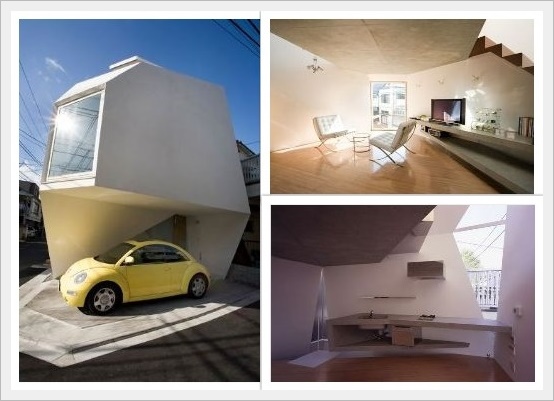
1. Tokyo - modern & minimalist tiny house

It’s called the Reflection of Mineral. The 86.2 m2 floor area is spread over four levels, including a basement. Inside, the play of light on the angled surfaces provides visual interest throughout the day. Windows placed in the corners draw the eye along the long diagonals, increasing the perceived space. The living room window faces the intersection, taking advantage of the longest available view. Mirrored surfaces, openings between floors and large skylights all add to the feeling of spaciousness. This house is the epiphany of future sustainable housing not just for individuals and couples but for families as well, especially in areas like Tokyo where space is truly limited.


2. Finland - a comfortable cabin in the woods

Built from recycled materials for around $10,000 lakeside cabin in Finland is deliberately —and smartly — designed with a teeny-tiny footprint as to avoid building permits and bureaucratic red tape. Less than 9 m2 cabin consist of a loft for sleeping and storage, a ground floor lounge/living area, kitchen and bathroom. The house is designed to maximize the allowed area, plus boosting the capacity for great acoustics and natural day lighting. In addition to the tall window, there's an adjacent deck for a great view of the tranquil surroundings.


3. Australia - The L41home

Designed by Michael Katz and Janet Korne, the L41home is a sustainable, power-environment friendly home that really places the type in compact dwelling. Key features include an integrated building mechanical system, "the beating heart" with solar thermal capillary heating and cooling, and sustainable construction techniques, including non-toxic materials, LED lighting, zinc exterior cladding, a green roof, super-efficient windows and cross-ventilation.
As important, the L41 is intended to be mass produced, with the price declining as production goes up, making this a viable alternative to traditional-sized and conventionally constructed dwellings. This abode is ultra micro — only 20 m2.


4. Germany – Seelenkiste (Soul Box) Another Tiny Wooden Cabin

A group of three students designed a relocatable dwelling for one person, whilst building, they thought that it would be a good idea for it to be a spirit hut, meaning it would be placed in a secluded, rural setting to give the occupant quiet time in order to contemplate and self-explore. Seelenkiste itself is a relatively simple timber frame structure in which sections can be prefabricated, flat-packed and transported to the owners site. A small team is then able to assemble the different components to create the tiny retreat. Area is only 8 m2.


5. The oldest Little House in Toronto

It may look like a playhouse for children, but fully grown people actually live here! Built in 1912 by contractor Arthur Weeden, Toronto’s Little House, as its known, is only about 7′ wide, 47′ deep, with a total of less than 28 m2 of living space inside. The house has everything that is needed, a pull out bed, kitchen, laundry, lounge room, etc. Then house even has a small back yard.


Thursday, 22 November 2018

Sierra Nevada – Mountain of the Sun

The Sierra Nevada ski resort is located at Pradollano in the Sierra Nevada Mountains and is a perfect location for your next ski holiday in Spain. It has numerous runs of varying difficulties to satisfy all levels of skiers. Natural snow is supplemented by snow cannons on some runs, and many skiers are pleasantly surprised to find that, because of its southerly position, the air temperature is usually warmer than other resorts. Sierra Nevada is well known as the sunniest ski resort in Europa. Depending on the snow level, the ski season generally runs from the end of November or the beginning of December until the end of April or early May.


Come sun or snow, the Sierra Nevada is the place to take a walk on the wild side. Europe’s second highest mountain range after the Alps, the Sierra Nevada is home to wild, rugged mountains, fertile valleys and forests of oak and chestnut. Just a few miles inland from the Costa del Sol you would be forgiven for thinking you were on a different planet.


Those travelling with young children will find Sierra Nevada perfectly suited to a family holiday. The resort boasts an ice rink where you can get to grips with skating, and the Mirlo Blanco Activity Zone, which offers tobogganing, ski-biking and bobsledding, as well as mini skis and snowboards for little winter sports enthusiasts! For those seeking some much needed rest and relaxation, the resort offers a heated, outdoor pool, range of saunas and a well-equipped gym; while for those interested in trying some exciting outdoor activities, snowmobiling, sleigh rides and hiking are also popular options.


There is a surprisingly active nightlife in the Sierra Nevada resort. Spaniards have a reputation for being night owls and this it often attributed to a hot climate that encourages people to lie low during the day and come out only once the cool of the evening has set in. However, the winter scene at Sierra Nevada contradicts this - or at least proves that old habits are hard to break.


The beauty of a Sierra Nevada ski holiday is the sheer diversity of opportunities available: you could be skiing in the morning, but you could also be lazing on a soft-sand beach the same day afternoon! The white sands of the Costa del Sol are just a two hour drive away from the resort, so it’s certainly worth a trip if you fancy a break from all that snow! Of course, the magnificent city of Granada is also nearby, scattered with Moorish ruins and churches. With spectacular architecture and a distinctly Andalucian charm, it’s a fantastic place to spend a day or two.


The Sierra Nevada ski resort boasts stunning ski chalets, hotels and apartments. It is small in comparison to other European resorts however the facilities are considered top-rate and it has hosted numerous national and international ski and snowboard events. With its ancient villages, sublime views and remote isolation, the Sierra Nevada is the place to get away from it all.

How to get there!

The Sierra Nevada ski resort and ski station are easily accessible from both Granada or Málaga provinces. From Granada, it is 45 minutes by car or bus from Granada´s Estacion de Autobuse just south-east of Granada city, the provincial capital. It is about one hour from the airport. Visitors should also consider visiting the attractions in Granada city. If you're coming from Málaga airport, the ski station is about two hours driving and is not difficult to find if you head north, following the first to Granada and then to the Sierra Nevada "Estación de Ski".

Please visit www.sierranevada.es/en/ to get more information about local attractions :)

Sources:
www.andalucia.com
www.exodustravels.eu
www.homeaway.co.uk